Monday, 12 April 2010

Week 12: Tyndale Monument/Berkeley Castle


Hello again world. I am currently typing this with the Controller of BBC Learning at the desk to my left, it’s freaking me out but am assuming he is far to busy and important to look over my shoulder and anyway have just spent about half an hour on Gumtree with him there which is much more clearly a non work task than this. On that note please let me know if you or anyone you know is looking for a double room to rent on a short term basis from the beginning of May.

Right, this weekend I returned to the maternal bosom and went home to the West Country, to be specific a small town just north of Bristol on the edge of the Cotswolds called Thornbury. Not only did this involve being waited on hand and foot, having steak and roast chicken and Eton mess and large amounts of gin and wine bought to me at all times of night and day but it also provided me with a rich and plentiful supply of cultural delights for my blog, it being a rich and plentiful neighbourhood. My mother has spent over 15 years lecturing me about the history of virtually everything in relation to these sites every time we went for a walk and at last it will come in use.
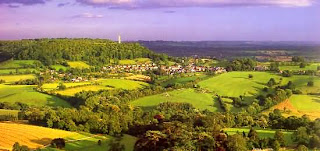

First port of call was a favourite walk of ours for many a year which is the walk from Wotton under Edge to the Tyndale Monument. Wotton is a very pretty very old village/town that gets its name from its position directly under a steep hill which is the edge of the Cotswolds, i.e. it’s under the edge. Basic huh? It seems to have been owned by the Berkeley's since time began, a family that you will learn more about in but a few paragraphs. Lucky you. Overlooking Wotton is the Tyndale Monument, erected in 1866 by the people of the area, and that is where we head for our walk as it’s on a big hill and can be seen for miles around.
Tyndale was very important. He was born in 1490 very near the site of said monument and is thought to have taught the family of a local landowner for a while round the corner. He was educated at Oxford and at some point after this decided, inspired by Lutheranism and all that stuff, to translate the Wycliffe bible into English, so everyone could read the word of god and therefore hasten on the massive decline and eventual death of Christianity after everyone realised it was a load of crap. I should say here that if you’re offended by this hahahahahahaha - you a barbaric and delusional retard I have no time for you and neither does my blog and frankly I am offended by you. Anyway, translate it he did for the good of all mankind and, unable to print it in England he went to Germany where it was produced and smuggled back into England. By the time of his arrest in 1535 Tyndale had translated both the Old and New Testaments. He was sentenced to death and on 16 October 1536 was strangled and burnt at the stake at Vilvorden, near Brussels. His dying prayer: 'Lord open the King of England's eyes' was answered the following year Tyndale's English Bible was printed in England 'with the Kings most gracious licence'. The King James Version of 1611 also follows Tyndale's New Testament very closely. So, pretty important guy really. The Victorians being AMAZING as always decided to erect a big old monument to him on the top of the hill and it was done up again for the millennium I believe and you can now go all the way up to the top. This I did, going up a very tight and not un-scary spiral staircase and for some reason my legs still haven’t recovered. The view from up there was amazing though, especially in the almost-summer like day we had on Saturday.
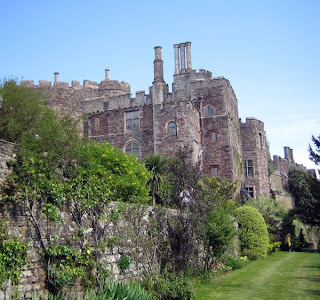
On Sunday alas the weather was slightly less fabulous but not put off in the least we set out, this time accompanied by my father, to Berkeley Castle, but 15 mins drive from our house. Berkeley castle is the oldest inhabited castle in England and has been lived in by the same family for almost 900 years. Not bloody bad. Unlike many other castles it has not gone through significant modernisation over the centuries and the castle has expanded around a 12th century keep that still remains today. Much of the rest of the castle is 14th century. It was built appropriately enough to keep out the Welsh hoards, jolly good thing too. It was given by Henry II to Robert FitzHardinge, Governor of Bristol (who was descended from the Kings of Demnark), with power to strengthen and enlarge it, in roughly 1150. Its proper job fortified with holes for boiling oil to be poured down, a natural moat and crenulations etc. There are those slit windows for arrows and also trick stairs when you first come in with steps designed at different heights to trip people up when running up them. Clever. It was breached once by Parliamentarians during the English civil war, given back to the family a while later under the instructions that the broached walls, which took 3 days for the Parliamentarians to destroy, would remain ruined so the castle would never again be such a strong and therefore dangerous fortress. However, other than that it’s still a complete castle which is pretty impressive.
It is here that Edward II, according to legend, was executed by having a red hot poker shoved up his arse in 1327. A weak and unpopular leader he was also widely believed to be gay, hence the poker. I won’t go into details about Edward as frankly it would all be off Wikipedia anyway which is something of a cheat but he married Isabella and at some point sent her off to France to sort out a diplomatic issue. Whilst there the neglected Isabella took a lover; Roger Mortimer and it is widely believed that on her return the 2 of them plotted to invade England. Somehow they managed this and to cut a long story short imprisoned Edward here in Berkeley castle. They take great delight in showing off the dungeon which leads from one of the upstairs rooms in the keep down to courtyard level. Usually prisoners would have just been thrown down the hole and left there to die, assuming the fall hadn’t killed them to begin with. If that didn’t do it the household threw all their shit and animal carcasses etc in there in the hope that it would asphyxiate the poor old prisoner. Edward probably wasn’t thrown down the dungeon but installed in the room above, ready to be happily suffocated by the stench of rotting festering crap. He must have had a strong constitution though and alas it didn’t kill him. Isabella, wanting the guy to die of ‘natural causes’ left it for a while but eventually arranged to have him strangled in his bed by his jailors and alas the red hot poker story is almost certainly a myth. My mother use to take great, GREAT, delight in telling me his screams could be heard as far as Gloucester so she must have been very disappointed to hear it was all bollocks.
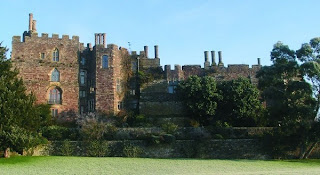
Other famous inhabitants of the castle include Sir Francis Drake who was good mates with the family and came to visit every time he was near by trying to find timber for his ships and also Elizabeth I stayed there at one point and shot all the Earls dear which apparently he wasn’t too pleased about. She turned up with her lover as well what an old whore. The bitterness between Elizabeth and the Berkeley family came to a head when the queen rode in the front gate with her entourage, Lord Berkeley rode out - a supreme insult.

The Berkeley family is very interesting indeed. I didn’t realise just how influential they were. For example; it was they, or rather a branch of them, who bought a great big house in London and, after a while, granted a large amount of their garden back to the city, or the crown or something, for a public square named, of course, Berkeley Square. This was sold off in 1919 for £2 million in order to restore the castle, probably a mistake I would have thought. One of the Berkeley’s was a philosopher and on his death had his significant library donated to Yale university with the understanding that it would be used to set up a new university on the West Coast which obviously, is now known as the University of California at… Berkeley!! I had never seen the connection as Americans always pronounce it bUUURRkley.

The castle is very lovely inside with some fabulous paintings, tapestries and furniture. Something that particularly took my fancy though was a chair/table/chest thing in one of the kitchens which would be terribly useful in my life as well as some beautiful Van de Velde ship paintings of the various ships under Berkeley command, it being a naval family. The family is also known to this day as being massively into hunting, the Berkeley hunt still takes place each year and they are famous for wearing yellow rather than the traditional red, or pinks or whatever it’s called. Horace Walpole, the subject of last weeks blog was also much taken by the place when he visited and bought several items. Anyway this has gone on for far too long and I have no doubt missed out all the most important things I saw oh well. It was a great day out though and an excellent venue for weddings which they clearly make most of their money out of. See you all next week!

Tuesday, 6 April 2010

Week 11: V&A/Horace Walpole and Strawberry Hill

I don’t know about you but I feel like killing myself this morning want to be back in bed hiding from the cruel cruel world. I hope you had a delightful Easter weekend, mine was very nice but don’t worry, I wont bore you with all the details. Due to the fabulously long weekend this weeks cultural exploration is slightly late and having occurred a full 4 days ago please forgive me for forgetting large chunks of the exhibition, probably for the best anyway. This weeks cultural activity took place last Friday, when the bank holiday seemed to stretch before us like a land of dreams – why can’t I be back there?? WHY?? Accompanied by the beauteous John and Diccon we strode out in the pouring rain to South Kensington and the Victoria and Albert museum for the exhibition Horace Walpole and Strawberry Hill.

As usual I must confess to my supreme ignorance re Horace and his hill, he was very important/famous/arty/loaded I do know that. I had heard of him and everything and knew he has stuff to do with Gothicism but, embarrassingly, I thought he was early 19th century not mid 18th – oops!!! Basically I have only ever really been aware of him in relation to Victoriana-arama, which sadly is true of most of the pitiful jumble of knowledge accumulated in my tiny brain, so there. Anyway, to cut a long and frankly highly homosexual story short he was the very rich and no doubt highly eccentric son of Prime Minster Robert Walpole and spent what must have been a not inconsiderable fortune collecting and housing his ever expanding collection of Gothic and Renaissance art and artefacts.

Strawberry Hill was his country residence near Twickenham. I have to say if I had the means for a country seat I would have gone a little further afield than provincial old Twickenham. I suppose it can’t be too far away from London as you would want to be able to access it fairly easily and not put people off coming for weekend parties. Ahh, can you imagine being able to hold your own country house weekend parties, only ones NOT full of posh wankers!?! Would have hunting and fishing and shooting and cream teas on the lawn with croquet and me wearing a big hat and playing charades whilst pissed like in Northanger Abby or whichever one it is. Which one is it? Who knows.

Anyway, I digress massively. Strawberry Hill is currently undergoing restoration and will open to the public again in late September and, top tip here, if you to the exhib at the V&A which is £6 or free to students; at the back of the guide is a token for 2 for 1 entry to the house which is valid for a year once it opens. Not bad. This brings me nicely to what was my overriding experience of the exhibition: it’s basically a dirty great big advert for the grand re-opening of Strawberry Hill later this year. Now, it’s not that I mind this or anything, in fact I know it’ a good, nay great thing to publicise this great national treasure chest etc. But, in my heart of hearts I do object to it, yet know not quite why. I think, maybe, if the house was unrepaired or a thousand miles away or protected by a fire breathing dragon or something I would understand but it’s not, it’s in bloody Twickenham and if you just waited a few months then got off your fat arty arse you could go and see all the objects in situ, where they belong. Obviously some of the pieces are stand alone fabulous works of art or historical interest or whatever. Great. But some of it, some of it IN the exhibition, was stately home junk shop crap that no one really cares about unless it’s in situ. For example; some paintings AFTER Poussin, some paintings AFTER Holbein, some paintings once thought to be by someone mildly important and since proved not to be. Who the hell cares? This stuff would look great on the walls of a fabulous stately home designed around its collection, but here!! Frankly, and this is a personal opinion I know; I wouldn’t pay to go and see an exhibition of real bloody Poussins let alone some 300 year old rip offs who the hell cares about them?

The whole exhibition, to me, seemed to hinge around one thing: the viewers ability to successfully visualise the usual Strawberry Hill setting for the objects. The curators even included floor plans of the house in the exhibition guide. The first thing the viewer sees when walking in is a load of, quite pretty, sketches and paintings of the exterior of the house. Throughout the exhibition there are images of the interiors including architectural plans, satirical sketches and informal visions of the rooms. Great but again, what’s the point? Just go to the sodding house it’s NOT THAT FAR and NOT THAT LONG TO WAIT. I felt continually throughout the show that the viewing experience was somehow displaced and alien, post modern in a bad way. I don’t really need to see millions of, frankly quite amateur landscapes of some house. They would look lovely in the reception hall, or the downstairs loo, but aren’t worth anything to anyone hanging on the walls of the poky V&A exhibition space surely? I am positive I am very very wrong about this, but for me it is undeniably how it felt. It was a feeble reflection.

The exhibition was curated oddly around a sort of zigzagged corridor. Apart from fashion exhibitions I have never been to a well curated show at the V&A. Everything always looks shoddy and badly thought through, shoved into corners with absolutely no understanding of space or light. They also have a really bizarre fetish for shoddy, wobbly looking faded cardboard screens with some insipid and depressingly faded looking pattern on. I have never been to a non-fashion show there that didn’t give me the impression leaning against a wall would knock the entire exhibition down like dominoes and we would be left in a room that hadn’t been dusted for about 35 years. They love beige as well, why?

Disregarding all this for a moment the house does seem wonderful and I am very much looking forward to going at some point. Walpole acquired the lease in 1747 stating "I am going to build a little Gothic castle at Strawberry Hill", and he asked his friends for objects and enlisted the help of his friends Richard Bentley, who was an artist and draughtsman and John Chute who was responsible for much of the main elevations of the house and the interiors. He spent the rest of his life filling it with various pricey objects, writing histories, criticism and founding a printing press there in 1757. His novel, "The Castle of Otranto", the first Gothic novel was inspired by the rooms there.

Seemingly every element of the interior and exterior are based on models from Gothic buildings both around the country and abroad. I greatly admire this – it reminds me of a documentary I saw a few years ago about Paul Daniels and Debbie McGees house which is new but built out of elements of old buildings to create a totally random jumble of architectural styles and influences. You can’t help feeling it all smells very much of new money, even if it doesn’t. It does look beautiful indeed and I like the fact that it was a hub of artistic and intellectual society. Towards the end of the exhibition there is a small section on female artist who Walpole somewhat patronised there.

Each room was ‘themes’ – a bit like a 13 year old girl crossed with Vegas. There is a Holbein room and a specially designed circular or octagonal or something room for the display of his most important treasures, which he housed in a really odd cabinet also displayed in the exhibition.


A few things that stood out for me where:


The wooden cravat c. 1690 Walpole wore to greet his guests one weekend; he must have been some CrAzY dude:


I was also fascinated by the toothpick case c. 1780 given to him by a friend as a gift. Who gives friends toothpick holders? What was said ‘friend’ attempting to tell him???:


Anyway, an altogether odd exhibition I felt but non-the-less worth a visit.

Monday, 29 March 2010

Week 10: Hampstead/Keats House


Hola everyone. I am taking the opportunity of an all staff meeting to run off, hide and do my blog. Oops. Due to the clocks going forward and me not waking up til 3 yesterday I couldn’t sleep last night and was consequently late for work this morning. Because of this I forgot to shove the 2 books in my bag that this weeks cultural exploration was based around so luckily you will be spared some of the more painful details. I will say that this weeks exploration was the most explorative yet though. Last week I had a dentist appointment mid day on Monday and it was only until about an hour before that I realised I had no idea where it was and couldn’t find our A to Z anywhere. So, as always, I turned to my trustee neighbourhood library which I LOVE. Whilst browsing their travel and maps section I came across several local history guides as well as walking guides for all different places in London including Hampstead and Highgate, both of which I live very near to. There was also another book called ‘The Streets of Hampstead’ by the Camden History Society. Fab fab fab. The delightful, and ridiculously lucky Georgie is currently abiding in a rather massive mansion on the edge of Hampstead Heath where she is dwelling RENT FREE, bitch, so we both decided to do the Hampstead walk so she could be even more smug about her neighbourhood, which in my opinion is far and away the nicest part of London.

Alas it wasn’t until about half way through the walk that I realised the meaning behind the title of the walking tour book. Mystery Readers Walking Tours of London was not, funnily enough, similar to mystery shoppers or mystery diners but was actually a book based around MYSTERY NOVELS. I couldn’t work out why they kept on going on about characters from a random book I had never heard of. Oops. Luckily Hampstead is so pretty and so full of historical wonders that it didn’t really matter. Apologies Georgie. Despite this I managed to glean some very interesting info such as the name Hampstead deriving from the Saxon word for homestead, Boudicca is reported to be buried under Parliament Hill (amazing), it is the highest place in London with the deepest tube and it was once a forest but was stripped bare after the Great Fire of London in 1666 to rebuild the city. There you go, if you’re like me you’re already learning something new today well done!

We started our walk at the tube station and went down the High Street to Rosslyn Hill. The Streets of Hampstead book went on at some length about the history of the high street such as its widening and other fascinating facts like that (?) but interestingly enough some of the streets coming off the high street used to have covered entrances until things like busses got in the way. The guide gave us a choice between going down Pilgrims Lane or continuing on down Devonshire Hill to Keats House which we decided to do. Devonshire Hill was once owned by someone with a title, that’s all I can remember oops but god the houses are nice nice nice down there and the beautiful spring weather made it even more god damn desirable. Ho Hum. I hope the people who live there are incredibly unhappy so there.

I have never been to Keats House before and it was quite enjoyable, although not the most earth moving of experiences. I hasten to admit that alas I am not his biggest fan in the world but that’s definitely due to my ignorance and laziness as opposed to not enjoying his poetry. In fact when standing in the room they think was his study I very much enjoyed reading the laminated card with Ode to a Nightingale on – it was here that he wrote this amongst other great pieces. It actually made me want to read some Keats as some point which I will endeavour to do, at some point. Apparently the garden was also very inspiring to him or something. The entrance fee was £5 which was a bit steep I thought seeing as they didn’t have an awful lot of stuff there but there were some very nice prints and paintings and in general it was a joy to be in such a beautiful Regency property.

After leaving Keats house we returned to Pilgrims Lane which was the home over time of many great artists and arty types including Ben Nicholson who lived at number 1 and Jacqueline de Pres and her man who lived a couple of doors down. There is also a weird nautical sculpture stuck to the wall of one house where a guy called William Johnson Cory once lived. He was a notable Eton tutor and made up the Eton Boating Song which is apparently important to those whose parents don’t love them enough but he was also forced to resign for being a big old gay-o and went to live there. When I Googled him just now to get the correct spelling of his name it said he was married though so not sure if my book was embellishing the truth a bit or if this was a marriage of convenience etc. Anyway, we walked down there onto Willow Road and briefly considered going into 2 Willow Road the National Trust Modernist gem but I am more up for doing that in the summer when I want to laze around on the Heath all weekend and will drag myself in there for half an hour so I have something to write for that weeks blog.

After this we wandered back to Georgies house so she could pick up her camera learning on the way about the delights of Hampstead as a spa in the 18th century which is where road names such as Well Walk and Flask Walk come from. It was here where people came to sample the health giving Chalybeat spa water. However, it was known to have such a horrible taste a chaser was needed which is why there are so many pubs in Hampstead. On the way back to Georgies we passed by a drinking fountain on Well Walk which claims to pump this out, It wasn’t working alas but had a cool inscription which I didn’t think to wrote down oh well. On googling the word Chalybeat I came across this interesting bit of info which takes me back to my favorite part of my Courtauld Undergraduate degree which was all Victoriana –arama. I had to do an essay on Ford Maddox Browne which incorporated the slightly controversial and politically laden topic of Hampstead Heath during the 19th century. Here you go:

However, was it not for a heroic battle fought by local residents in the 19th century, Hampstead Heath would have long since disappeared beneath a concatenation of Victorian developments. In 1829, Sir Thomas Maryon Wilson, Lord of the Manor, attempted to push the first of several Private Acts through Parliament that would enable him to build on the heath. Local residents, led by the banker John Gurney Hoare, were outraged, and began a campaign to save the heath that would last until Sir Thomas’s death in 1869. On one occasion, Sir Thomas decided to order the planting of thousands of willows, turkey oaks and firs upon the open heath, an action that brought a howl of indignation from Dickens, who protested at ‘such violation of virgin heathland’. However, Sir Thomas’s brother and heir, John, proved more amenable to local opinion, and in 1871, sold his estates hereabouts to the Metropolitan Board of Works and the cause was won.

After a quick tea break at Georgies house we were off again, over to Jack Straws Caste, that poor Georgie was very disappointed by understandably. It is thought to be the highest pub in London and took its name from Jack Straw who was one of the leaders of the 1381 Peasants revolt and apparently addressed the baying hoards here from atop a hay wagon which became known as Jack Straws Castle. Alas it was bombed to bits in World War 2 and that weird ply-wood thing was constructed in its place in 1969, a decade not known for the beauty of it’s architecture. From there we walked down the winding path to the Vale of Health which I always thought of as being more of a street rather than the area it in fact appears to be. According to the internet the name the Vale of Health, recorded in 1801, may have originated as a euphemism which was exploited or as a new name invented in a deliberate attempt to change the image of the place by the local builder as it had been considered a bit of a pestilent swamp type place before this. This is very upsetting to me as I had been lead to believe that it was given that name due to the great plague never reaching its heights, but apparently not. Damn it, hate it when that happens. Anyway it was the centre of all things arty back in the day and Byron and Shelly amongst others lived there as well as DH Lawrence. It was uber pretty, although the residents must be more than a little irked by the massive skanky falling apart caravan site next door for all the people who work at fun fairs to live on. NICE. On that note there was also some kind of gypsy wedding going on round the corner – my god the outfits. From there we walked out across the heath, the very very muddy heath, and home. Very nice day indeed.

Tuesday, 23 March 2010

Week 9: Painting History: Delaroche and Lady Jane Grey/National Gallery


Hello all and welcome back me. Apologies for my absence yesterday and last week; I had the day off yesterday and last week I was recovering from the cultural overload that was Israel – I firmly believe my excess holiday activity made up for the following weeks total abject laziness though. To catch up on what I got up to on my holiday (or what the weird Christians on the way back would have called a ‘pilgrimage’ – funny that) read the 3 mini-blogs listed below. I had a lovely time indeed.

This week I was fully back on the cultural trail thanks to the lovely Andrew whose press pass got us in free to the National Gallery exhibition: Painting History; Delaroche and Lady Jane Grey. It would have been £8 otherwise!!! Luckily I still wasted lots of money on postcards, audio guides and most importantly a lot of coffee. Think I sent about £30 on coffee this weekend actually, oh dear.

Firstly, I love love love Lady Jane Grey – it’s one of my top 3 favourite pics in the National Gallery which is saying something. Unwisely, and not true to form, last week I started reading the Brian Sewell review of the exhibition in the Evening Standard. He was very silly indeed. I didn’t read after the first 2 paragraphs as he was talking such total smug bollocks but he started attacking my beloved Lady Jane Gray, ATTACKING it, when everyone knows it’s amazing- I mean for god’s sake they have based an entire exhibition around the fucking thing. Prick. Anyway, Brian was claiming the National Gallery didn’t have any proper History paintings and now never would. I have to say after seeing this exhibition I think this can only be a good thing as clearly we know neither how to appreciate them nor, more worryingly, how to look after them. It turns out Lady Jane Gray was presumed destroyed in the Tate flood in the 1920s and it wasn’t until the 1970s that anyone bothered to even unroll the canvas to have a look! When they did so they found it in almost perfect condition – they only opened it up to look for another painting by someone else! Shocking. Also, upstairs, they had another massivo painting by Delaroche called Charles I Insulted which had been bombed during the war and suffered major shrapnel damage and the first time it had been unrolled since 1941 was 2009!!! WTF???? WHY would they not do so before? I understand if they didn’t have the money to restore it before now but for god’s sake they could have at least opened it up to have a look sometime in the last 60 years surely?? Really bad form.

Anyway, this is all very interesting when discussed in terms of the reception of both Delaroche’s work and the whole genre of painting he worked within. Clearly Delaroche had fallen quite significantly out of favour sometime between his death and the beginning of the 20th century. This is something the curators return to throughout the exhibition and use somewhat as a framework. However, they don’t seem to draw any real conclusions about why he was so unfashionable for so long except that, apparently, according to them, come the 20th century no one cared about the past anymore (??? – really??).

Rather than being a straight out Delaroche show they have chosen instead to set him within his artistic milieu discussing artists who would have influenced him and then following through to artists who he would have influenced, which I found an interesting approach. The exhibition begins with a room of Troubadour paintings. This was a style of painting which found great popularity in the later part of the 18th century and early 19th century (I THINK) and was a reaction to Neoclassicism (why oh why anyone would want to react against Neoclassicism I have no idea but there you go different strokes for different boats). Pissed off with the constant unrest and regime changes of the last few decades artists turned to the newly opened Musée du monument français in Paris; a museum housing the remains of any medieval art or architecture that had not been destroyed by successive generations of political extremism. It became hugely popular, imbuing the medieval past with a romanticized image of a simpler, nobler time, filled with Christian goodness and appropriated as the usual escapist fantasy idyll. In painting this new style united Neoclassicism, and a more romanticized (pre Romanticism obviously), domestic form of art usually involving some delicate and touching family or domestic scene. Images such as this are a bit like a precursor to the Victorian domestic parlor painting with supposedly accurate historical details in costume and setting married with the 19th century taste for gentle and whimsical interior scenes; it’s basically Neoclassicism-light. These, I have to admit, are all pretty grotesque but am not in the least bit surprised they were so popular around this era. It was the fashion for this genre which secured Delaroche’s popularity during his lifetime. Annoyingly I can’t seem to find a single image from this room of the exhibition though sorry.


This use of supposedly detailed historical realism bought Delaroche to England where he sketched backgrounds to some of his most famous paintings including the Princes in the Tower. Themes such as this were highly popular during this period and Delaroche uses the story to full effect creating a canvas bursting with suspense and fear. This image is particularly interesting as it demonstrated Delaroche’s superior understanding of space and gesture as dramatic device. Originally conceived as a portrait style canvas; additional strips were added to both sides to include a dog and a locked door. These additions are what make this image so successful, the small animal sits up with ears raised in the direction of the locked door which displays just a crack of light and the unmistakable shadow of someone on the other side – scary. This lead to one of the more interesting rooms of the exhibition which demonstrates the influence of theatre on Delaroche’s work. When I mentioned this to my friend John he rolled his eyes and said something along the lines of ‘oh god not that bloody theme again’; but in fairness I really do think it applied to Delaroche’s style! It turns out he was good mates with playwrights such as the FAB Dumas and even designed stage sets for some plays during his lifetime. This helped him to develop an understanding of space as a dramatic devise – realizing that the absence of action/figures on a canvas could be as dramatically effective as a canvas packed with action and drama. Likewise the firm clear gestures of his figures are often borrowed from stock acting poses of the era. He also returned to themes for paintings which had been recently popularized by stage plays etc.


Assassination of the duc de Guise at Blois: 1834


One of the most interesting outcomes of this theatrical influence was his use of the window or an opening off stage as a dramatic element in the composition and narrative of his paintings. This can be seen in images such as the Princes in the Tower but also paintings such as Strafford led to Execution where the emotive hands of Charles I sticking through the window are able to express all the torture and humility needed.


Another interesting nay great piece is Cromwell – another v big painting which saw Delaroche once again returning to themes from British history. This caused a massive stir when it was shown at the Salon of 1831. Themes from this period of British History were very poplar in France at this time as it was easy to draw parallels between the British unrest of the 17th century and the French political upheavals of the 18th and 19th centuries. In this wonderfully creepy painting Cromwell stands over the coffin of his arch nemesis Charles I, holding back the lid and contemplating the demise of the great man within. Here we see the new contemplating the old, the unrest and uncertainty of ‘democracy’ face to face with the old order of King, monarchy and unswerving devotion and obedience to the crown. .


Other masterpieces in the show included, obviously, the great Execution of Lady Jane Gray along with other woks such as Young Christian Martyr, which was based on his wife and Marie Antoinette leaving the Convention after her Sentence. These all demonstrate some kind of weird fixation with innocent yet condemned tragic female figures, a trend he seemed to move away from after the death of his wife yet demonstrates the influence of Troubadour painting on his work.


The rest of the exhibition concentrates on the studies for the Execution of Lady Jane Grey, including some really inappropriate letters between him and the likely model, an actress he was clearly knocking off. It was so gross actually, nothing to do with the art what-so-ever just a chance for everyone to laugh at the poor guy in love – everyone knows soppy love letters should never be read out of context and all this part of the exhibition proved was that Delaroche wanted to get his end in and consequently wrote a lot of cheesy rubbish – it was really cringey poor guy. There was also a room showing examples of later artists influenced by Delaroche including a Beautiful painting by Gerome – see below:

I could go on an on about the FAB use of purple drapes and strange heavy carved wood barriers in front of the paintings but luckily for you all i wont as need some lunch!

See you next week xxx

Wednesday, 10 March 2010

JERUSALEM

Hello few followers am back to bore you with more of my foreign explorations. Today I finally made it to Jerusalem and bloody hell it was an hardcore and not overly enjoyable experience. I could rant for about 4 hours about, mainly, how truly shit my Frommer's guide book is (although have no right as got it basically half price and thanks to the fragrant emily) but don't worry I wont. I will instead concentrate on the things I DID manage to see despite it's useless WRONG information. I DID see the Church of the Holy Sepulcher, I DID see the wailing/western wall. I DID see lots and lots and then more lots of bizarres, I DID see the Mount of Olives and the amazing city walls. I DID walk around in circles a lot in the blazing heat. It was very strange to come 50 minutes down the road (fabulous scenery on the way) from what feels like a totally European city to then suddenly be on holiday in the Exotic East. I know I should have been excited about following the stages of the Cross etc but I really couldn't make myself care about where Christ fell over and found myself instead, worryingly, getting all excited about treading the same streets that Holeman Hunt and (I'm assuming) people like Byron etc wandered. It was just so damn Victorian exoitca. I know this is really really bad. My great dissapointment is that, geting there after 11, I decided to g to the Temple Mount later in the day as my piece of crap guide book told me it closed between 11:30 and 1:30 and then was open again until 3. HOWEVER, when I got there at 1:30 it was in fact closed for the rest of the day. This means I missed one of the mos historically rich sites on earth due to my shit shit shit guide book. It was only printed about 8 months ago not that much could have changed surely??? OH WELL. So I missed the Dome of the Rock, Solomon's Stables and the Al Aqsa Mosque and loads of other important great things that who the hell knows when i will have the opportunity to see again, because believe me after the journey and general experience i had today i really can't face going back again this week. oh well. Luckily I did have the good fortune of doing the walk of the old ramparts which you can do as an almost complete circle round the old city (well as long as you don't mind scaling a 5 foot fence at one point) and it was really really great. Not only was it a wonderful break from the sweltering and claustrophobic atmosphere in the streets, being cool and calm and empty, but also it provided amazing views not only across Jerusalem but also onto the Mount of Olives, the surrounding countryside and also, thank god, the dome and upper parts of the Dome of the Rock which is fab and covered with gold and gorgeous gorgeous gorgeous tiles. I love tiles. From there the whole place seemed totally magical and holy and ancient which is exactly how you want it to feel. It really was amazing actually and exactly the way you would visualise it all steep steep mountains hazy in the heat with the sound of Muslim prayers being pumped out and the sense that important shit has been happening here for thousands and thousands and thousands of years. The whole day did make me feel depressed as hell about how little I know about either Religion or History though. Ho Hum. Anyway, nothing but bagels when going round as so hot but schnitzel this eve which was nice. xxx

Tuesday, 9 March 2010

Tel AvIv Day 2

Hello lovely people going to make this v quick as is v late and am going to attempt to get up at a reasonable hour tomorrow and go to Jerusalem having failed miserably again today to get up before noon. In fairness to me we were up til gone 4 last night dancing round in a gay club so hardly my fault. We also had a delicious Georgian meal including lots of yummy aubergine based snacks, breaded calamari stuffed with mushrooms and very yum meat pilaf. Installment 2 of Hebrew Hotties though is that surprisingly, and very much in opposition to London trends; gay men in Irael are seemingly not as good looking as straight ones! Who knew?!
So, today wasn't as sunny or hot as yesterday so spent the first hour or so (ie 1pm oops) n Carmel market supposedly buying people gifts but actually buying myself a nice necklace - fuck all you guys haha. Then i had the nicest lunch ever outside in a cafe with a random old woman who shared the table with me. It was an Iraqi sandwich which was on dark dark bread with fried aubergines, sliced boiled eggs, gherkins and this creamy sauce and it came with a huge chopped salad, which they are obsessed with here (a good thing in my book) and a dish of olives. Yum. They also serve their cold coffees with sugar water which in my head sounds romantic and exotic. Drinking cold coffee also makes me think am Gregory Peck in Roman Holiday which is defo a good thing. Then looked round Yaels gallery which was excellent but alas i don't have the booklet and therefore can't remember any of the artists names. There was some damn good stuff with collage though rach take note. And cool revolving glass things projecting images onto the walls. - sorry yael that's a crap description i know but am knackered. Then after that I went to the Tel Aviv Art Museum/Museum of Art which was ace and had loads of really really beautiful Fauve stuff. I had forgotten totally about the Fauves I must admit and it had totally escaped me how much I LOVE them. Also lots of cubist stuff and general fab post impressionism and oddly this pitch back room filled with all these doll house rooms done up in the interior styles of various eras of history - I enjoyed it but definitely odd.
Major dissapointment is that even though i am on my HOLIDAYS, ABROAD, I couldnt find any of the obligatory transparent bags of really greasy crinkle cut crips that i adore and are the man reason for me having holidays. Oh well. Did have yum dinner with Yael and her lovely fried Liz of Moroccan fish spicy style stew on couscous. Lastly you can smoke in bars here!!! It's illegal but everyone ignores it - fab!!!! Wish me luck getting to Jerusalem tomorrow may just try and get a cab to the bus station but dont have a number?! Miss you Meadway.

Monday, 8 March 2010

Tel Aviv Day One

Dear all
I am writing this backwards and it's really sodding confusing. The reason I am writing this backwards is that I am currently sitting at the lovely Yaels computer in very sunny Tel Aviv and everything is in Hebrew! She is off doing arty important things and it took me about half an hour to work out how to type in english rather than hebrew. I am concerned about spell check, aka my best friend so if this is coming to you phonetically that will be the reason why. So here I am in lovely Tel Aviv having survived successfully a 5 hour easyjet flight to get here. My advice to all out there planning on flying here take note: take some sort of sars mask; orthodox jews aren't allowed to use deodorant ad where wool , my god what it will be like on the way home dread to think. However, this is probably made up for by the fact that they were all praying like crazy before we got on the plane AND during the flight so felt very reassured, unless god is Allah in which case was probably not very safe. Hey hoh. Anyway, as I did nothing cultural last week due to last minute holiday preparation hell and obviously laziness i i thought i would do a series of mini blogs outlining all the fab adventures i am having on my hols. So far I can inform you most definitley that they do not use measures here. was very drunk last night and rather hungover this morning so, after waking up a about mid day all i could really manage was to drag myself down to the beach, which by the way is less than 2 minutes away, and lie there eating yummy things and having the occasional paddle. the weather is baking so don't feel guilty in the least i haven't had a holiday since last september and some people never move from the beach all holiday. Also very nice beaches with fine golden sand and lots of people hitting balls back and forth with hard wooden paddles - its very popular here apparently and they do it very aggressively! UMMM the food was gooood as well. Unfortunately, or maybe fortunately, my guide book does not have a long enough food section BY FAR and i was thus forced to guess my orders, but luckily i eat pretty much everything with gusto anyway. Firstly, the pitta bread here aint like the pita bread at home, Here, rather than a chewy anorexic looking piece of tasteless paper they are thick and fresh and moist and yeasty and delicious. mmm. Totally different kettle of fish. I had them with a yummy dish called Shakshuka which was amazing; it came in a little mini frying pan with a lid and it was basically eggs baked in an incredibly rich tomato and pepper sauce, clearly fresh, which you spooned into the pitta and wolfed down f you were me. Thank god i don't seem to be suffering from my usual holiday loss of appetite completely thing as my god i intend to eat a lot while im here. apparently its also strawberry season and you can buy a punnet the size of your head for abut a pound, surprisingly though the food isn't THAT cheap, although in fairness i have been mostly sticking to the tourist heavy beach cafes, But hey who can resist sipping in the culinary delights of a nation by the sea. Tomorrow do intend to be more active though and wil try and make it t Jerusalem where hopefully i will eat even more delicious treats aubergines and falaffel def high n the agenda. Tel Aviv itself, of what I have seen so far, isn't what expected. t's more run down than I thought it would be but it has a real 'continental' be to it; lots of wide airy tree lined boulevards with out door cafes and the same poster things as they have in Paris haha. I was talking to some guy on the beach who told me Israel is like the middle east but tel aviv is like europe. Who was this man on the beach you might ask? Well that leads me nicely to what will be known as my Hebrew Hotties section because my god the men are good looking here. On average way way way better looking than english men - no offense guys you know i love ya. But FUCK ME there are some good looking men around here, it must be the army thing and also the sun thing as they are totally buff and tanned - not my usual type as such but undeniably Adonis like. If i had a digital camera there would now be lots of pictures of ripe young specimens with captions sch as PHWOAR! My god they know it though. Girls here must get A LOT of action as just being on the beach for 3 hours i made a lot of new friends. I also taught about 5 guys the meaning f the word 'letch' . I am getting quite attached to my fictional boyfriend though he s a mix of most of the guys ive ever gone out with. I suspect he will develop a lot over the coming days. Yael just got home and we are going out with her exiting art crowd to a Georgian restaurant that am very excited about so will sign off here til tomorrow or possibly the day after. Bye